What Does LYKYK Mean? The Ultimate Guide to Internet Slang’s Favorite In-Joke
If you have spent even five minutes scrolling through TikTok, Instagram, LYKYK Mean or group chats recently, you have almost certainly stumbled across the four-letter acronym “LYKYK.” Maybe it was dropped under a cryptic video of a specific niche coffee shop, attached to a hyper-specific meme about high school chemistry, or used as a caption for a photo that seems completely random to anyone outside a specific circle of friends. While internet slang evolves at a breakneck pace—leaving most of us feeling like we need a translation dictionary just to keep up with daily social media—LYKYK has managed to stick around as one of the most popular and versatile phrases in digital communication.
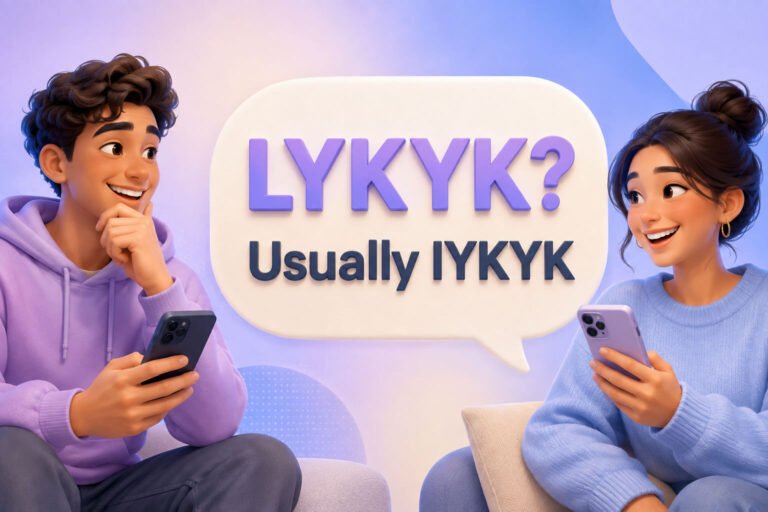
At its core, “LYKYK” is an abbreviation for “Let You Know You Know,” which is a slightly varied shorthand for the classic phrase “If You Know, You Know” (sometimes written as IYKYK). It functions as a digital nod, an insider joke, and a subtle signal of shared experience all rolled into one compact phrase. Instead of taking the time to write out a lengthy explanation, users drop this simple acronym to acknowledge that a specific context, reference, or punchline is intended for a select audience who gets the reference without needing it spelled out.
Understanding “LYKYK” goes beyond merely knowing what the letters stand for; it is about understanding the psychology of online culture, community building, and how we communicate in a digital age. Internet culture thrives on shared experiences and niche subcultures, and LYKYK acts as the ultimate bridge between creators and the viewers who share those exact experiences. Whether you are trying to decipher a friend’s cryptic text message or looking to level up your social media content strategy, getting a firm handle on what LYKYK means, how it is used, and why it works is an essential step in mastering modern slang.
The Origin and Evolution of LYKYK and IYKYK
To truly understand how LYKYK became a staple of modern text speak, it helps to look at its predecessor: “IYKYK” (If You Know, You Know). The phrase itself has been part of spoken language for decades, long before smartphones and social platforms dominated daily life. Traditionally, saying “if you know, you know” was a verbal wink—a way to share a private joke in a public room without alienating everyone explicitly. In the early 2010s, as character limits on platforms like Twitter encouraged extreme brevity, users began shortening common conversational phrases into acronyms, and IYKYK quickly gained traction across social media platforms.
Over time, “LYKYK” emerged as a phonetic and stylistic variation of the original acronym. Phonetically, “Let You Know You Know” rolls off the tongue slightly differently and is often used interchangeably with “If You Know, You Know.” In casual messaging, keyboard habits and slang variation happen rapidly, and LYKYK developed its own identity alongside IYKYK. Some communities prefer LYKYK because “Let You Know” carries a slightly more active, invitation-like tone, signaling to the reader that an inside reference is being highlighted for those in the loop.
As platforms like TikTok, Instagram Reels, and Twitter/X rose in popularity, the acronym transitioned from a casual texting abbreviation into a full-fledged content formatting tool. Creators realized that using LYKYK in video captions or text overlays incentivized engagement; viewers who recognized the hidden context felt compelled to comment and confirm their “in-group” status, while those who didn’t were driven to read the comment section to figure out the secret. Today, LYKYK is no longer just a trend—it is an established part of the global internet lexicon.
How “LYKYK” Works in Everyday Digital Communication
The beauty of LYKYK lies in its versatility across different social contexts and digital channels. In personal text conversations or group chats, dropping “LYKYK” is a quick way to reference a past event, an embarrassing shared memory, or a mutual acquaintance without having to re-hash all the details. For example, sending a photo of a specific burnt toast recipe to a group chat with the caption “Breakfast was great today, LYKYK” instantly recalls a past cooking disaster that everyone in the chat remembers, saving time while reinforcing personal bonds.
On public social media platforms, LYKYK serves as a filter that divides the audience into two distinct groups: those who are “in the know” and those who are on the outside looking in. When a creator posts a clip with a subtle reference—such as a specific line from an obscure movie, a reference to a localized regional landmark, or an inside joke about a specific video game mechanic—adding “LYKYK” signals that the content isn’t meant for a general, mainstream audience. It acts as a beacon for like-minded individuals, inviting them to join in on the joke.
Furthermore, LYKYK acts as a powerful tool for visual storytelling. Many social media posts consist solely of an image or a short video paired with the caption “LYKYK.” By withholding an explicit explanation, the poster creates an atmosphere of mystery and exclusivity. The audience is invited to play a passive game of decoding the message, which makes the experience of understanding the post far more satisfying than if the caption had simply explained everything in straightforward, plain detail.
The Psychology Behind Inside Jokes and the Power of Exclusivity
Why do human beings love using phrases like LYKYK so much? The answer lies in basic human psychology and our deep-seated need for belonging and social connection. Social psychologists have long studied the concept of “in-groups” and “out-groups”—the idea that humans naturally form groups bound by shared knowledge, experiences, or identity. Inside jokes are one of the most effective tools for building and maintaining an in-group because they create an instant feeling of intimacy and mutual understanding among those who grasp the reference.
When you see a post tagged with LYKYK and you immediately understand the hidden meaning, your brain receives a micro-dose of validation and connection. You feel like part of an exclusive club that possesses special knowledge. This sense of exclusivity fosters a feeling of closeness between the person posting and the person consuming the content, even if they are total strangers on opposite sides of the world. It transforms passive content consumption into an active feeling of shared community.
Conversely, if you see LYKYK and do not understand the reference, it creates a psychological phenomenon known as the “curiosity gap.” You recognize that there is an intriguing piece of information being shared, but you are currently excluded from it. This drives users to investigate—by scrolling through comments, asking questions, or searching online—to bridge the gap and become part of the group that “knows.” This psychological dynamic explains why LYKYK is not just a linguistic quirk, but a powerful social driver online.
Examples of How to Use “LYKYK” Correctly in Context
To truly master the usage of LYKYK, it helps to see it applied across a variety of real-world scenarios. Because it can be used humorously, nostalgically, or even cryptically, observing its application in different contexts helps clarify how to weave it into your own digital vocabulary smoothly. Here are a few common ways LYKYK pops up across the web:
- Nostalgia and Shared Experiences: Posting a photo of an old physical media item or a discontinued childhood snack with the caption: “Trying to explain how much stress this specific screen gave us back in 2008… LYKYK.” Here, the acronym highlights a collective memory shared by people of a specific generation.
- Niche Hobbies and Pop Culture: Sharing a screenshot from a video game showing an extremely rare item or a difficult level with the text: “Spent 4 hours on this jump alone. LYKYK.” Gamer communities heavily rely on LYKYK to bond over specific mechanics or shared frustrations that non-gamers would not appreciate.
- Local or Relatable Humor: Uploading a short video of a notoriously busy local intersection or a specific weather anomaly with the caption: “Driving through downtown at 5:00 PM on a Friday… LYKYK.” This targets people who live in the same area or deal with similar daily hassles, establishing immediate regional solidarity.
Notice how in every single instance, the phrase replaces a long, explanatory paragraph. Instead of explaining why the jump in the video game was hard or why the intersection is frustrating, LYKYK lets the audience fill in the blanks themselves, keeping the tone light, conversational, and punchy.
How Brands and Content Creators Leverage LYKYK for Engagement
While LYKYK originated as organic text slang, modern social media marketers and digital content creators have adopted it as a strategic tool to boost audience engagement and drive algorithm metrics. Social media algorithms on platforms like Instagram, TikTok, and YouTube prioritize posts that generate high comment volume, shares, and watch time. Captions that include “LYKYK” naturally encourage all three of these key metrics by sparking curiosity and community dialogue.
When a brand or creator posts a video with an implicit reference and tags it LYKYK, it creates a comment section goldmine. Users who understand the reference rush to the comments to type out their thoughts, confirm they got the joke, or add their own related stories. Meanwhile, users who are confused comment asking for an explanation (“Can someone explain?”). Other users then reply to those comments to explain the context. This multi-layered comment chain signals to the platform’s algorithm that the content is highly engaging, causing the post to be pushed to a broader audience.
Moreover, brands use LYKYK to humanize their image and connect with younger demographics. A brand that successfully uses inside jokes and modern internet slang appears more relatable, authentic, and in-tune with contemporary culture, rather than coming across as a cold, corporate entity. However, brands must use acronyms like LYKYK authentically; using them incorrectly or on references that are too broad can make the company appear out-of-touch, revealing the fine line between natural digital communication and forced marketing tactics.
Common Mistakes to Avoid When Using LYKYK
Even though LYKYK is a casual, flexible term, there are a few common pitfalls to keep in mind if you want your usage to sound natural and expert. The most frequent mistake people make is overusing the phrase on information that is completely obvious or universally known. If you post a photo of the Eiffel Tower with the caption “Visiting Paris, LYKYK,” the phrase loses all its meaning because there is no hidden reference, inside joke, or exclusive context involved. Everyone knows what the Eiffel Tower is, so using LYKYK here feels misplaced and unnecessary.
Another common mistake is confusing LYKYK with other similar-sounding internet acronyms. Because the landscape of internet slang is densely populated with abbreviations—such as LMK (Let Me Know), TTYL (Talk To You Later), or NGL (Not Gonna Lie)—it is easy for beginners to mix up the letters or misuse the phrase in conversational contexts. Remembering that LYKYK specifically stands for “Let You Know You Know” (or functions as “If You Know, You Know”) helps keep its proper context clear.
Finally, avoid using LYKYK in formal, professional, or academic writing unless you are specifically analyzing digital communication trends, as you are reading here. While it is perfectly suited for social media posts, group text messages, and casual commentary, inserting internet slang into professional emails or business proposals can come across as unprofessional. Knowing your audience and choosing the right medium for casual acronyms is the key to using them effectively.