Taylor Swift Symbols: The Meaning Behind Her Most Recognizable Imagery
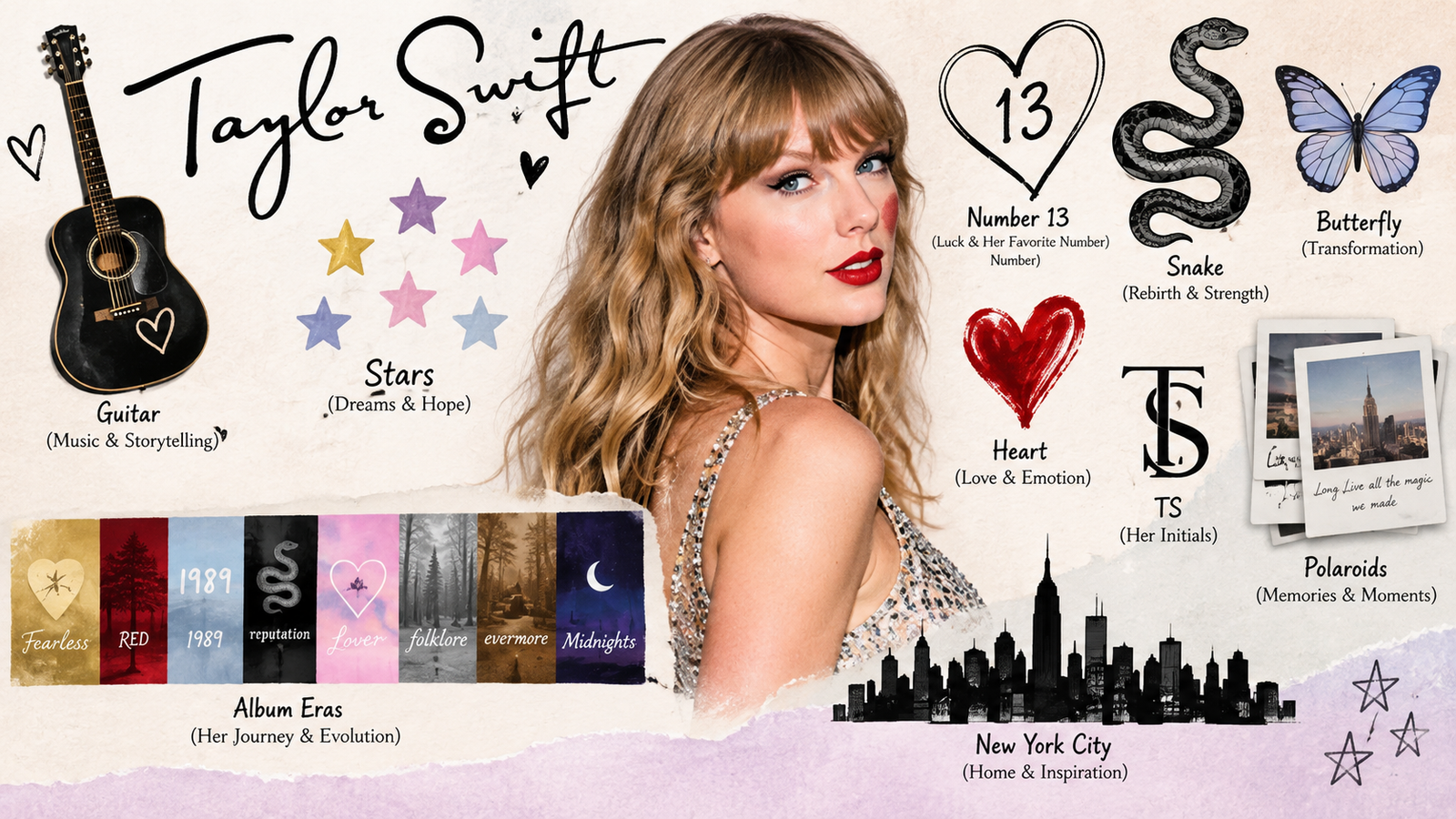
Taylor Swift symbols have become an important part of the way fans understand her music, visual storytelling, and different creative eras. From snakes and butterflies to stars, hearts, colors, numbers, and handwritten clues, her imagery often gives songs and albums another layer of meaning. Some symbols are connected to specific songs, while others have become part of her wider artistic identity.
One reason these symbols attract so much attention is that they rarely exist on their own. A particular object, color, or image may appear in a music video, artwork, stage design, clothing choice, or social media post. Fans often connect those details with lyrics and themes from her work.
It is also important to remember that not every image has a confirmed secret meaning. Taylor Swift has a long history of using visual details in creative ways, but fan interpretations can sometimes go beyond what she has publicly explained. Understanding the difference between documented symbolism and fan theories makes the topic even more interesting.
Why Taylor Swift Uses Symbols in Her Music
Taylor Swift’s songwriting often focuses on emotions, relationships, personal experiences, memory, change, and identity. Symbols give these ideas a visual form. Instead of explaining every feeling directly, an artist can use an object or image that allows listeners to make their own connection.
For example, a snake can represent something very different depending on its context. It can suggest danger, betrayal, transformation, or power. When an artist repeatedly uses the same image, fans naturally begin looking for connections between that image and the surrounding story.
This approach also works particularly well for albums built around strong visual identities. Different periods of Taylor Swift’s career have had noticeably different aesthetics. The imagery associated with one period can feel completely different from another, helping listeners recognize a shift in mood, themes, and presentation.
The Snake Symbol
The snake is one of the most recognizable Taylor Swift symbols. It became particularly associated with the period surrounding her Reputation era. The image appeared prominently in promotional material and visual content connected with that period.
The snake carried several possible meanings because it had already been used by other people in public discussions about Swift. She later incorporated the image into her own artistic presentation. Instead of simply treating the symbol as negative, the imagery could be viewed as a way of reclaiming an image that had been used against her.
The snake also fits the broader themes of Reputation, including public perception, conflict, reinvention, and personal relationships. Its appearance therefore became more than a decorative choice. It became part of the visual language surrounding that chapter of her music.
Butterflies and Transformation
Butterflies are another symbol that can be connected with transformation and personal change. In general symbolism, a butterfly represents movement from one stage of life into another. That makes it a natural image for an artist whose music has evolved significantly over time.
The transformation associated with a butterfly can also reflect the idea of leaving an earlier version of yourself behind. An artist may use this imagery when discussing growth, maturity, emotional recovery, or a new creative direction.
For Taylor Swift, fans have often connected transformation imagery with changes between musical eras. Her career has moved through country, pop, alternative-influenced, folk-inspired, and other sounds. The visual changes accompanying those musical shifts have helped make each period feel distinctive.
Stars and Celestial Imagery
Stars are another recurring type of imagery that fans may notice when exploring Taylor Swift symbols. Stars naturally suggest dreams, distance, ambition, hope, and something that remains visible even when it is far away.
A star can also represent fame in a literal sense. Someone described as a “star” is often associated with success and public attention. Because Taylor Swift has spent much of her career under intense public observation, celestial imagery can have several possible interpretations.
There is also an emotional side to stars. Looking at the night sky can create feelings of nostalgia and wonder. In songwriting, this kind of imagery can help connect personal experiences with something much larger. That makes stars useful visual symbols for themes involving memories, dreams, and relationships.
Hearts and Romantic Symbols
Hearts are among the most familiar symbols in popular music, and they naturally appear around themes of love, heartbreak, relationships, and emotional vulnerability. Taylor Swift’s catalog includes many songs exploring these subjects from different perspectives.
A heart does not always represent a happy romance. A broken heart can communicate loss, while a growing or changing heart can suggest emotional development. The same basic symbol can therefore support very different stories depending on the surrounding imagery.
Taylor Swift’s use of romantic imagery has also changed over time. Earlier work often presented relationships through direct storytelling, while later projects have sometimes used more abstract language and visual references. This evolution allows familiar symbols to take on different meanings.
The Color Red
Red is particularly important when discussing Taylor Swift symbols because of its connection with her Red album and its wider visual identity. The color is naturally associated with strong emotions such as love, anger, passion, excitement, and heartbreak.
That range of meanings makes red especially suitable for an album exploring intense emotional experiences. Love is rarely presented as a single emotion. It can involve excitement, jealousy, sadness, confidence, regret, and nostalgia. Red can visually represent that emotional intensity.
The color also has a strong visual impact. When used in album artwork, clothing, photography, or promotional designs, red immediately attracts attention. Its simplicity makes it memorable, which helps connect the color with a particular creative period.
The Number 13
The number 13 is one of the most widely discussed symbols connected with Taylor Swift. She has publicly associated herself with the number, and it became a recognizable part of her fan culture.
For many fans, the number became a small but memorable detail to watch for. It could appear in different contexts, encouraging listeners to notice seemingly ordinary details. This helped turn the number into a kind of personal signature.
The interesting part about the number 13 is that it demonstrates how a simple detail can become meaningful through repetition. A number normally has little emotional significance, but repeated use can transform it into an identifiable symbol associated with an artist.
Easter Eggs and Hidden Details
Taylor Swift symbols are often discussed alongside the idea of Easter eggs. In popular culture, an Easter egg is a hidden reference or small detail that rewards careful attention. Fans have spent considerable time examining music videos, lyrics, artwork, outfits, and promotional material for possible connections.
Some clues are clearly intentional, while others are interpretations created by fans. This distinction matters because a visual detail can look meaningful without having a confirmed explanation from the artist.
The popularity of Easter eggs has also changed the relationship between artists and audiences. Fans are no longer only listening to songs. They may also examine videos frame by frame, compare album artwork, analyze lyrics, and discuss recurring imagery online. This creates a participatory side to modern music fandom.
The Importance of Colors in Different Eras
Colors can help distinguish one creative period from another. Taylor Swift’s albums have often had different visual moods, and color plays an important role in establishing those moods.
Soft or pastel colors can create a completely different feeling from dark or dramatic tones. Similarly, black, white, red, blue, pink, gold, and other colors can suggest different emotions depending on how they are presented.
This is why Taylor Swift symbols should not always be considered separately. A color may become more meaningful when combined with an object, setting, costume, or lyric. The overall visual language can tell a story that is difficult to communicate through one symbol alone.
Clocks, Time, and Memories
Time is a recurring theme in Taylor Swift’s songwriting, making clocks and related imagery interesting symbols to examine. Time can represent memories, growing older, missed opportunities, changing relationships, or the distance between past and present.
A clock is particularly powerful because it suggests movement. The hands continue moving whether a person is ready for change or not. In a song about looking back, this can create a visual representation of how quickly life moves forward.
Time-related symbolism also works with nostalgia. Many songs explore the feeling of remembering something that cannot be recreated. A clock can therefore represent both the passage of time and the desire to return to a particular moment.
Mirrors and Self-Reflection
Mirrors are another useful symbol when discussing identity and self-reflection. A mirror shows a person’s appearance, but in storytelling it can also represent the way someone sees themselves.
This concept fits naturally with songs about personal growth and changing identity. Someone may look back at an earlier version of themselves and realize that their priorities, relationships, or understanding of the world have changed.
Mirrors can also represent the difference between public and private identity. A celebrity may have one image in the public eye while experiencing something very different personally. Symbolic imagery can explore that contrast without explaining it directly.
Why Fans Analyze Taylor Swift Symbols
Part of the appeal comes from the fact that symbols give fans something to investigate. Listening to a song becomes only one part of the experience. Fans can compare lyrics with music videos, album artwork, performances, and other creative material.
This creates a community around interpretation. Two people can notice the same symbol and understand it differently. One person may see a reference to personal growth, while another may connect it with a particular song or period of her career.
That does not necessarily mean one interpretation is correct. Unless Taylor Swift or an official source confirms a specific meaning, many interpretations should be treated as possibilities rather than established facts. This is especially important when discussing alleged hidden messages.
Taylor Swift Symbols and Her Musical Eras
One of the easiest ways to understand her symbolism is to look at her work as a series of creative eras. Each era has its own musical characteristics, photography, colors, clothing, artwork, and recurring visual themes.
The symbolism can help listeners recognize those differences immediately. A darker visual style can create expectations about the mood of an album, while brighter imagery can suggest a different emotional atmosphere.
This approach also demonstrates why Taylor Swift symbols have become such an important part of her overall brand. The music remains central, but the visual presentation creates another layer through which audiences experience the songs.
Final Thoughts on Taylor Swift Symbols
Taylor Swift symbols are more than random decorations. Snakes, butterflies, stars, hearts, colors, numbers, clocks, and other images can contribute to the stories surrounding different songs and creative periods. Some meanings are connected to documented artistic choices, while others come from fan interpretation.
The most interesting aspect is that symbolism allows music to become visual. A single image can remind listeners of an album, a song, a particular period, or an emotion. Repeated imagery can also create connections across different pieces of work.
At the same time, it is useful to keep an open mind when discussing hidden meanings. Not every detail is necessarily an Easter egg, and not every fan theory has been confirmed. The combination of documented symbolism and personal interpretation is part of what makes Taylor Swift’s visual storytelling so engaging