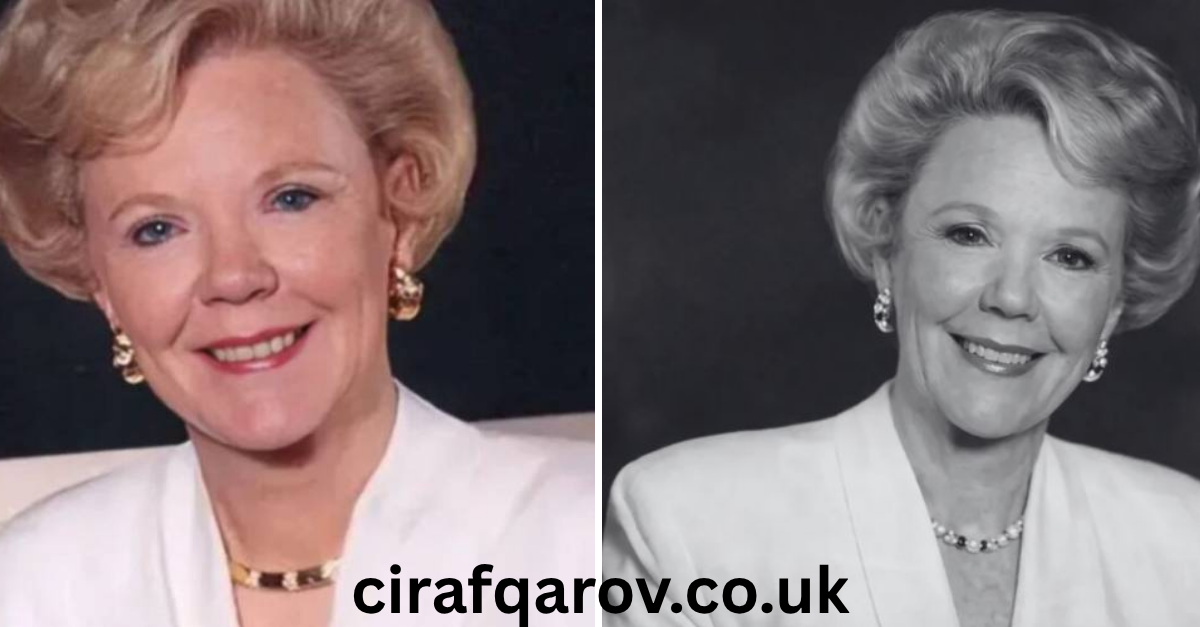
Marilyn Kroc Barg: The Untold Story of the Woman Behind the McDonald’s Empire
Most people assume the Marilyn Kroc Barg story begins and ends with Ray Kroc. The fast-talking salesman, the milkshake machine wizard, the man who bet everything on burgers. But behind every empire is a family, and behind Ray Kroc was his only child, a woman whose name rarely appears in the history books. Her name was Marilyn Kroc Barg, and her story is one of quiet strength, unexpected philanthropy, and a legacy that reaches far beyond the fryer.
While her father battled for control of a global brand, Marilyn Kroc Barg navigated a very different kind of pressure. She was born into the struggle before the fortune, watched her parents divorce as the money rolled in, and ultimately used her inheritance not for private jets or mansions, but to ease the suffering of sick children. This is the fresh, untold look at the heiress who chose compassion over corporate glory.
A Middle-Class Childhood Before the Golden Arches
Long before the Golden Arches spanned the globe, Marilyn Kroc Barg was just a girl growing up in Chicago during the Great Depression. Her father, Ray, was a traveling salesman who sold paper cups and later the famous five-spindle milkshake mixer. There were no private tutors or luxury cars. Her mother, Ethel Fleming, handled the home front while Ray was on the road for weeks at a time.
This humble upbringing shaped everything about Marilyn Kroc Barg. She knew what it felt like to wait for a paycheck. She understood the anxiety of a struggling small business. Unlike second-generation heirs who inherit a finished product, she watched her family climb from the bottom. That perspective gave her a rare empathy that would later define her life’s work.
The Complex Bond with Her Famous Father
Ray Kroc was a brilliant businessman but a complicated father. He was demanding, ambitious, and often emotionally distant. When he divorced Marilyn’s mother in 1961, right after buying out the McDonald brothers for $2.7 million, the family dynamic shifted forever. Yet through it all, Marilyn Kroc Barg remained loyal without being blind.
She didn’t pick sides publicly. She didn’t write tell-all books or air family drama in the press. Instead, she quietly took her place on the McDonald’s board of directors, where she could observe and influence from the inside. Her relationship with Ray was respectful but guarded. She loved him as a daughter, but she also saw his flaws clearly. That emotional intelligence made her a grounding force in a family otherwise known for its turbulence.
Finding Peace in the Equestrian World
While her father thrived on boardroom battles, Marilyn Kroc Barg found her sanctuary in the stables. She was an avid horse breeder and rider, spending countless hours training, competing, and caring for her animals. The equestrian world offered something the fast-food empire never could: silence.
At horse shows across Illinois and beyond, she wasn’t the heiress to a burger fortune. She was simply a skilled equestrian judged on talent and dedication. This passion gave her a sense of identity outside the Kroc name. Friends in the horse community described her as humble, hardworking, and deeply connected to her animals. It was her escape, her exercise, and her joy all rolled into one.
Marriages and a Quiet Personal Life
Love was not always easy for Marilyn Kroc Barg. Her first marriage to Sylvester Nordly Nelson ended in divorce after several years. The post-war era was tough on relationships, and the growing pressures of the Kroc name did not help.
She found lasting stability with her second husband, James Walter “Bingo” Barg. They married in 1960 and settled into a surprisingly normal life in Arlington Heights, Illinois. James worked as an administrator and supported his wife without seeking the spotlight. The couple had no children, which meant Marilyn Kroc Barg became the last direct bloodline of Ray Kroc. Despite the immense wealth surrounding her, she chose domestic peace over social climbing.
Her Overlooked Role on the McDonald’s Board
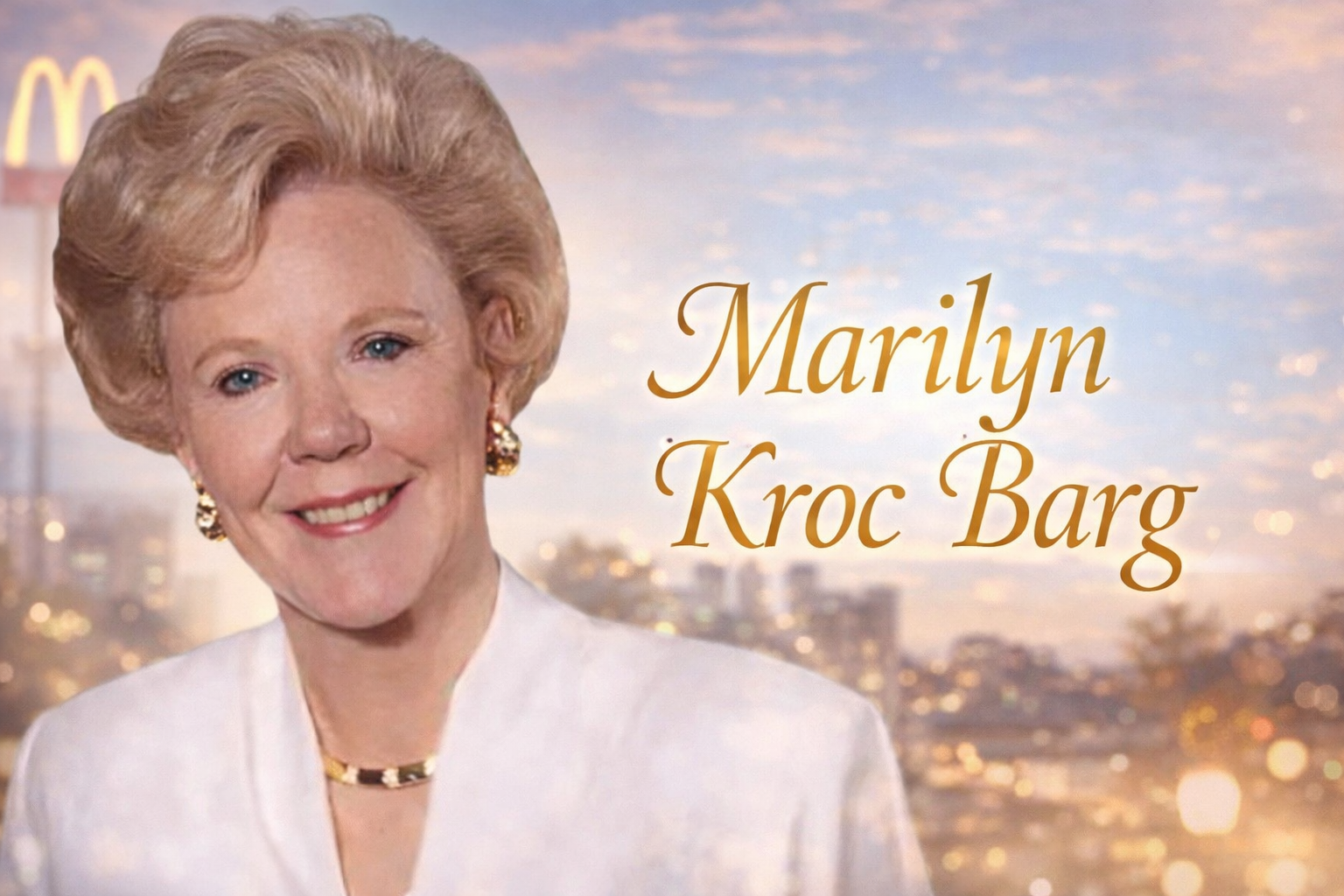
Most people assume Ray Kroc ran McDonald’s as a solo act. But Marilyn Kroc Barg sat on the board of directors during the company’s most explosive growth years. While her father obsessed over real estate and franchise agreements, she kept her attention on something else: the people.
She asked questions about employee welfare. She pushed for consistency in customer experience. Board members from that era recall her as a quiet but effective voice of reason. She didn’t grandstand or demand attention. Instead, Marilyn Kroc Barg used her position to ensure that rapid expansion did not destroy the family-friendly soul of the brand. Her contributions may not be in the textbooks, but they echo in every clean dining room and friendly counter service today.
The Real Birth of the Ronald McDonald House Legacy
Here is where the story of Marilyn Kroc Barg gets deeply misunderstood. Many people assume Joan Kroc, Ray’s third wife, invented the Ronald McDonald House charity. That is not entirely accurate. While Joan later made massive donations, the initial philanthropic spirit that seeded the movement came directly from Marilyn.
She was deeply moved by families who had to sleep in hospital waiting rooms because they could not afford hotels while their children received medical care. She saw the financial and emotional destruction this caused. Before her death, Marilyn Kroc Barg quietly funded early efforts to create “home away from home” spaces for these families. Although the very first official Ronald McDonald House opened in Philadelphia shortly after she passed, her vision and compassion were the blueprint. Every parent who sleeps in a safe, free room tonight owes a debt to her foresight.
Health Battles and an Untimely Passing
Life was not kind to Marilyn Kroc Barg in her final years. She fought a long and difficult battle with diabetes, a disease that was much harder to manage in the 1960s and 70s than it is today. She endured complications, hospital stays, and the slow deterioration of her health with remarkable dignity.
On September 11, 1973, at only 48 years old, Marilyn Kroc Barg passed away due to complications from her illness. Her death devastated her father. Despite his tough exterior, Ray Kroc never fully recovered from outliving his only child. She was laid to rest in Memorial Park Cemetery in Skokie, Illinois. Her passing meant that most of the Kroc fortune eventually went to her stepmother, Joan, but Marilyn’s moral legacy remained untouched.
Debunking the Myths and False Rumors
The internet loves a conspiracy. Search for Marilyn Kroc Barg, and you will find wild rumors about her “disappearing” or facing foul play. These stories are completely false. Verified medical records and historical archives confirm that she died in a hospital of natural causes related to diabetes. She did not vanish. She did not run away. She died peacefully, surrounded by medical staff and loved ones.
Another common myth is that she was worth hundreds of millions of dollars. In reality, records suggest her personal net worth at death was modest—likely between one and five million dollars. For the heir to a global empire, that is shockingly low. It proves that Marilyn Kroc Barg was not a spender or a show-off. She lived well below her means and gave generously to causes that mattered to her.
Why Her Legacy Still Matters Today
Marilyn Kroc Barg never wanted a statue or a press conference. But her influence is alive in every McDonald’s that treats employees fairly and in every Ronald McDonald House that keeps a family together during a medical crisis. She proved that inheriting wealth does not have to mean losing your soul.
Today, the company she helped guide serves millions of customers daily, and the charity she inspired supports over 300 houses worldwide. That is not a coincidence. That is the quiet, lasting impact of a woman who chose compassion over ego. When you see the Golden Arches, remember the name behind the scenes. Not the salesman. Not the tycoon. Just a woman who used burgers to build beds for sick kids.
Final Thoughts: The Heiress Who Stayed Humble
In a world obsessed with fame and fortune, Marilyn Kroc Barg remains a rare example of quiet virtue. She did not seek the spotlight. She did not write a memoir. She simply showed up, did her duty on the board, loved her horses, and fought to help families in crisis. She was never the loudest voice in the room, but she was often the wisest.
The next time someone tells you the McDonald’s story is only about Ray Kroc, correct them. Tell them about the daughter who could have bought anything but chose to give instead. Tell them about Marilyn Kroc Barg. Because real legacy is not measured in billions of burgers sold. It is measured in how many families slept safely because one woman cared enough to act.
Also read: cirafqarov.co.uk